Just What Is Genre These Days, Anyway?

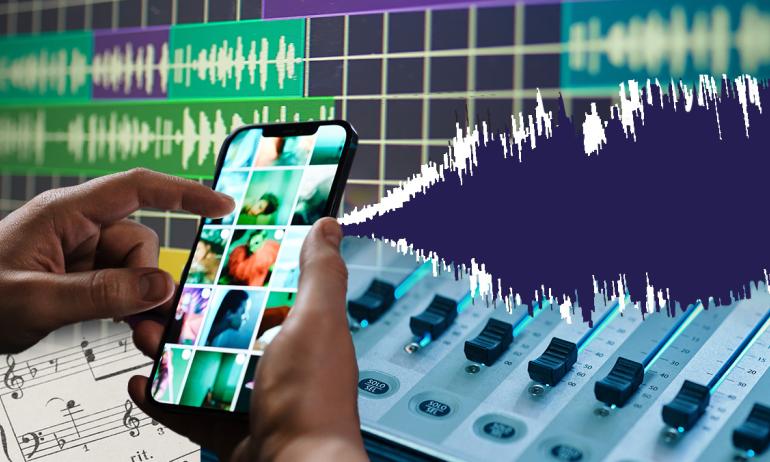
Illustration by Jack Flann
My 14-year-old son recently told me how much he loved dancing to funk music.
This surprised me, given that his listening habits trend toward a heady brew of Kendrick Lamar, Nirvana, and something called “The Rat Dance.” When he played me an example, to my ears it sounded like the latest iteration of trance-influenced EDM. The beat was metronomic, and there was nary a slapped bass to be heard.
But he insisted that the song he was playing had come up as one of the first results in Spotify when he searched by genre category. When I looked at his tablet, the screen read: “Showing results for ‘phonk.’”
Things got more confusing when I started researching phonk music, which is described as a hybrid of ’90s hip-hop styles, including trap, Memphis rap, and Houston chopped and screwed—with a funk twist—that gained popularity in the early 2010s. The phonk song my son played to me sounded nothing like any of that.
Come to find out, phonk in 2026 is actually shorthand for “drift phonk,” an Eastern European variation on phonk, but at a faster tempo and with nearly indecipherable vocal samples. Unsurprisingly, this subgenre gained popularity on TikTok and is noted for being paired with videos about weight lifting, fighting sports, and its namesake drifting.
Phonk is one of approximately 6,000 genres listed on Spotify. And this doesn’t even take into consideration the trend of major artists playing in the spaces between all those categories—Beyoncé’s “country” album, Taylor Swift’s various eras, Charli XCX’s blender-pop Brat defining the summer of 2024, to name a few.
So, the question looms: Just what is genre in 2026?
The Future Is Fluid
According to Martina Verano MA ’20, marketing coordinator for Anti- and Epitaph Records, it’s all about genre fluidity. “That is the status quo now. I think that's what you have to do to be different. You can't just be one sound.”
Ben Camp, assistant professor of songwriting, sees this fluidity as a dissolving of the boundaries that were the norm during the heyday of physical media and record stores. “[It’s] much more [open] than it used to be, where a genre was an exclusionary category. Now, it’s an inclusionary category. It's a bit more democratized in 2026 than it was.”
While that openness can be liberating for artists and listeners alike, it also poses marketing challenges, particularly around selling an artist and distributing their music, as these systems are still highly dependent on categorization. “Pitching, streaming—these are the reasons why you push artists into these boxes,” Verano says. “At the end of the day, you're just trying to get pitched. That's the bottom line.”
Playing with Identity
Samantha McKaige BM ’24 understands this struggle well, as she’s carved out a sound that combines Americana and folk styles with emo and pop punk. She came to Berklee as a folk artist, but the more people she met, the bigger her musical imagination grew. She started experimenting with alternate guitar tunings that are common in emo and math rock styles, and those different voicings led her into new sonic territory.
Since completing her degree in songwriting, she’s spent a lot of time on the road where, in addition to playing with her band as an opening act, she’s also served as touring manager. This skill flexibility has helped launch her career, and she says that “this is all I ever wanted to do while I was in school.”
But securing those performances isn't always easy. “I find it hard to pitch myself because certain things really require a genre, like specific opening slots. If a musician is touring through town and I want to open, how do I market myself?” she says. Within that problem, however, lies a solution. Because she’s built a musical identity that reflects her range, she can customize her pitches based on the style of the headlining act. “I feel like I can bend to the genre of whatever I need to. I have enough in my back pocket to make that kind of my identity, whatever it needs to be.”
Zwonaka Mafuna, a current double major in music business/management and music production and engineering, sees the mixing of genres as inherent in our identities. “I’m from South Africa, and I’m in America, so it's already a clash of Western and African music. But also I went to a Methodist school, so I used to listen to hymns,” he says. “Just as humans, we have so many different influences already that when you express something, it's genreless.”
A cinematic mix of ethereal vocals, atmospheric keys, and field recordings, Mafuna’s music draws inspiration from other genre-defying artists, such as Frank Ocean, Arca, and Radiohead. His style has been described as “indie pop,” but that term doesn’t capture the threads of South African amapiano and alt-R&B that weave through.
While making the music comes naturally for Mafuna, like McKaige, he has a hard time breaking it down into digestible categories. “It's always a struggle when I'm releasing music and I have to communicate to the DSP [digital service provider] or to the publisher,” he says. The term “alternative” can work, but it’s limiting. “When it comes to things like Spotify, I think the umbrella is electronic, but it's not necessarily like EDM. I also still use acoustic instruments a lot, but it's hard to describe it.”
For artists as singular as McKaige and Mafuna, it’s easy to want to just dispense with the whole genre label entirely, since the idea of a perfect fit feels like a thing of the past. From a neurological standpoint, however, it’s not that easy.

Illustration by Jack Flann
To Categorize Is Human
“Humans have been categorizing these things for hundreds of years,” says cognitive psychologist Erica Knowles, associate professor in the Liberal Arts and Sciences Department. She adds that “brains love categories” and are essentially pattern-recognition devices. “That's really all these genres and subgenres are, right? It's trying to give a name to a category that is maybe a little subjective, but has some underlying similarities.
Dave Marvuglio, an instructor in the Bass Department, likes to think of these countless subgenres as “dialects.” Marvuglio’s long list of credits include performances with jazz great Bill Pierce as well as the shock-metal band Ice Nine Kills. He leads directed study ensembles particularly in the metal, punk, and indie rock styles, so questions of genre evolution arise all the time in his classes. For instance, he points out that metal (already shorthand for “heavy metal”) is technically a form of rock ’n’ roll. However, “within the metal community, there are so many subgenres: doom metal, Viking metal, dwarven, metal caveman, battle doom, black metal, transcendental black metal, grindcore.”
As Knowles suggests, this need to label is likely inescapable. “We can talk about being genre-free, but I don't really know if we're ever going to get free of the need or desire to categorize things,” she says.
"Genre is culture, in other words. We can’t be post-genre any more than we can be post-culture."
Context Matters
In a cultural sense, there is a real risk in abandoning genres, given the long history of appropriation and erasure of popular music’s roots within the African diaspora. Jazz and blues, foundational to nearly all popular American music over the last century, are distinctly Black American musical expressions that emerged out of a context of displacement and slavery. As Chloe Swindler, assistant professor in the Africana Studies Department, points out, to ignore these origins as a musician carries ethical and artistic pitfalls. “If you haven't learned about why the blues were created and the circumstances that led to it, and you just go up there to sing a 12-bar blues, you're not gonna understand why this blue note should be here,” she says.
Swindler sees Berklee’s Global Afrodiasporic Musics course, which is required for all students, as one clear way to help musicians engage with these contexts. The first step, she says, is “immersing yourself in that culture, understanding more about how this music came to be so you can perform it more authentically—and be able to share the actual story behind it with people.”
From a songwriting perspective, Camp concurs, saying that imitating a genre you don’t live and breathe is “like being able to imitate the syllabic sounds of French. But if I drop you in Paris, nobody will understand you.” At the same time, when students try bringing in new genre elements to their songs, Camp uses it as a doorway. “What that shows me is that students are somewhat interested in that genre. So then I can use that as a jumping-off point and be like, okay, let's look at where this came from.”
Being genre fluid does not mean being genre ignorant. To switch musical dialects believably and with impact, you need to be mindful of the cultural and historical context of the sounds you’re making. This kind of consideration came up for Mafuna when he was working on his 2024 single “don’t tell anybody or else it won’t come true,” which features his friend and fellow student Riddhi Vikamshi singing in a Hindustani style.
“When I was making that, I was very much aware of the fact that I was dealing with another culture's music,” Mafuna says. “I knew that I had to have her lead the feature in her own way and tell me if something was not appropriate or if it felt diminishing at all to her culture's music.”
Genre is culture, in other words. We can’t be post-genre any more than we can be post-culture.
Developing Your Sound in a Genre-Fluid World
So, how does one go about developing an authentic sound in a world with 6,000 genres? “When you're in the creative process, don't worry about genre,” Camp says. “When you're in the marketing and branding process, that's when it becomes more important to think about.”
Michele Darling, chair of the Electronic Production and Design (EPD) Department, adds that experimentation is key. “In EPD, we encourage you to sound a little wild and don't think about genre for a little bit,” she says. But being wild doesn’t mean not paying close attention. Quite the opposite— it means thinking on a granular level about sound. “Becoming a critical listener is really important . . . so that you know genres, and you know what's happening in them, so you can then have more tools.”
She points out that, especially in the electronic music world, the subtlest EQ tweak can result in the birth of a new subgenre. Acid house, for example, came out of musicians increasing the harmonics in the high range on the Roland TB-303 synthesizer. “And then if you would move the EQ or the cutoff, it would increase the amount of volume in some of the higher frequencies,” Darling says. The squelchy bass sound that emerged was enough to launch a new scene with its own vibe.

Illustration by Jack Flann
Your Vibe, Your Narrative
Creating a vibe or evoking a lifestyle is becoming more and more important as listeners have moved away from strict genre categories. This is particularly relevant for artists trying to get included in playlists. Camp says that as algorithms have gotten good at generating genre-based playlists, curators are now focusing on vibes playlists—songs to listen to at the gym, when studying, in different moods, and so on.
Before Epitaph, Verano worked as a playlist curator and saw this trend in real time. “I would make a summer playlist, but I'm not just putting on pop songs that you assume would be there. You fit the vibe, which is how people listen to music these days.”
As emerging artists, both Mafuna and McKaige are thinking in this direction. For his newer material, Mafuna says he wants “to make songs that people could listen to in their car, or when they're having a party, or they're hanging out with their friends, but I still add in my own left-fieldness.” And McKaige's customized booking pitches allow her to use her genre fluidity to her advantage, showing how she can complement the vibe at a wide range of shows and festivals.
Rather than worrying about categories, they are instead gaining awareness of their brand—or as Swindler thinks about it, they’re controlling their narratives. “Being in control of that narrative is really important. It's important to me that [my] students walk away knowing that they are in full control of their brand,” she says. “If they decide how they want to be seen before other people do, they have a lot more power.”
This article originally appeared in the spring 2026 issue of Berklee Today under the title "It's a Vibe."