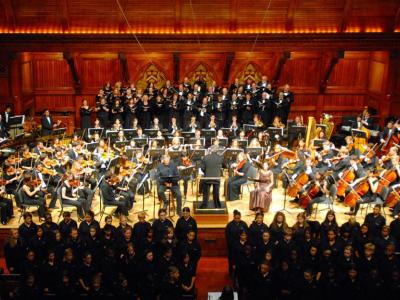
What does a Concertmaster do?
Simultaneously the most skilled and knowledgeable violinist of the orchestra while also the chief intermediary between the musicians and the conductor, the concertmaster is responsible for dictating bowings to the first violin section; playing solo passages in the absence of a guest soloist; understanding the conductor's ideas and communicating them in technical terms to the rest of the orchestra; leading the orchestra in tuning before rehearsals and performances; and assisting with aspects of the orchestra's management. While conductors may come and go—with differing styles and approaches—the concertmaster provides the orchestra with consistent and technically oriented leadership.
In addition to being an excellent player with deep knowledge of orchestra repertoire and fantastic abilities as a soloist, concertmasters must also cultivate superb leadership, teaching, and communication skills.
In addition to her or his regular duties, a concertmaster might assist in the audition and hiring process for principal players, resolve problems—artistic, technical, or personal—between members of the orchestra, or even work closely with the orchestra's music director as their right-hand person, weighing in on all artistic decisions. The importance of the concertmaster's leadership is not to be underestimated. While performing, the string musicians generally watch the concertmaster nearly as closely as they do the conductor—more so in cases where the guest conductor isn't gelling well with the orchestra.
At a Glance
The concertmaster is the highest leadership position among all the musicians in the orchestra, second in authority only to the conductor and music director (who may be the same person). Some concertmasters are former soloists who chose to settle down and join an orchestra, although most are dedicated long-term orchestra musicians who have worked their way up the ranks.
Symphony concertmasters typically work their way up after many years with the orchestra and prior leadership positions.
- Violin performance
- Sight-reading
- Deep knowledge of orchestral repertoire
- High-level instrumental proficiency and technical knowledge
- Dictating bowings for the string section
- Soloing
- Leadership
- Verbal communication
Superb leadership, teaching, and communication skills; ability to resolve problems (artistic, technical, or personal) between members; and interpreting direction from the conductor for musicians and vice versa.
Daytime rehearsals, evening performances, practicing, meeting with the conductor, studying scores, and preparing music. Often the first to arrive and last to leave.