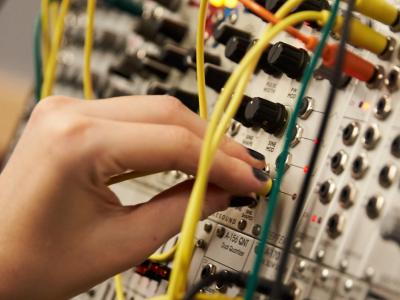
What does an Electronic Musician do?
An electronic musician creates or performs music using synthesizers, samplers, computers, controllers, drum machines, and other electronic instruments. The role may combine composition, sound design, production, improvisation, live performance, and audiovisual collaboration. Electronic musicians often design performance systems that make studio-created material playable and expressive onstage.

At a Glance
Electronic musicians bring a high level of proficiency on their instruments of choice. They make inroads as DJs, performers, remixers, producers, and music directors. In addition, electronic musicians find themselves working for various music technology companies as part of their product development and/or sales team. Electronic musicians need to be ready to wear many hats as it is common in the industry in which electronic musicians and artists will need to diversify their skill set and pursue multiple career paths at the same time in order to have a sustainable career.
Whether performing solo or as part of an ensemble, or producing music of other artists, many aspiring electronic musicians intern or apprentice with an established music producer as a production assistant; backing musician; music director or bandleader for an artist on tour; or as a sales engineer or developer at a music technology company that requires in-depth knowledge of technology and music production.
- Production software expertise
- Audio hardware expertise
- Live performance
- Stage presence
- Mixing
- Arranging
- Recording
- Electronic production
- Collaboration
- Leadership
- Networking
An electronic musician must bring a creative mind that can think on the fly, building sounds from studio clips as well as looping live compositions. The ability to improv is key.
The lifestyle of an electronic musician tends to be essentially the same as that of a touring musician: extended periods away from home, traveling from city to city to play for new audiences every night. Like many performance jobs, being an electronic musician is a freelance field, so securing consistent gigs requires a certain amount of music industry knowledge and connections.