What does a Session Musician do?
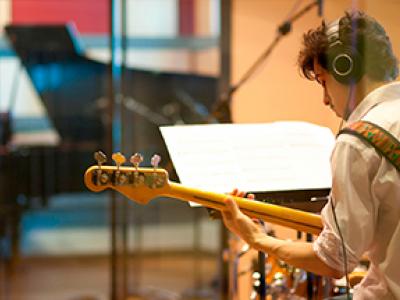
Although few people outside the music industry are aware of their vitally important role, session musicians are present in almost every hit pop song that uses real instruments rather than synthesized tracks. Boasting flawless technique, exceptional professionalism, and stylistic flexibility, they are the gold standard for polished studio playing. Whether it's a slow ballad, a driving acoustic stomp, a funky soul jam, or a brooding film score, session musicians learn the parts speedily and make adjustments to fulfill the needs of the producer or recording artist.
A session player who develops a reputation as consistently reliable and easy to work with, in addition to being highly skilled and versatile, is most likely to get steady work.
In some cases, session players might receive charts, mock-up recordings, or full scores several days before the session in order to begin to learn the parts. In others, they're expected to come to the session ready to sight-read and learn charts on the fly, or even to improvise parts based on verbal instructions about the style and feel of the track. Speed and consistency are incredibly important for this kind of work, as recording schedules and budgets are almost always tight. The best session musicians in the business minimize these costs for their employers by mastering parts quickly, adjusting rapidly when the direction of the track changes, and recording in a single take.

At a Glance
Most session musicians have a conservatory or university music education, as being able to read music (or at least simple charts) is critical to the job. Session musicians who form creative working relationships with recording artists might go on tour with them as part of their. Session musicians might also use their skills to earn coveted positions playing in.
Although in-house backing bands were once common—Booker T and the MG's at Stax Records, for example, or the Funk Brothers at Motown—most contemporary session musicians are independent contractors with freelance careers. Until they develop an industry reputation for high quality work or become the go-to backing musicians for successful recording artists or producers, a portion of every session musician's work life is devoted to finding gigs.
- Deep instrumental proficiency
- Sight-reading
- Improvisation
- Broad knowledge of and proficiency in different musical styles
- Versatility
- Reliability
- Networking
- Collaboration (particularly taking direction well)
Session musicians who are punctual, organized, prepared, professional, and flexible will be well-equipped to flourish in this highly competitive field. Humility and people skills are also important; a skilled session player who develops a reputation as consistently reliable and easy to work with is more likely to find work than one who is unpleasant, inconsistent, or egotistical.
Studio work is largely centered in cities, particularly major musical hotbeds like Los Angeles, New York City, Nashville, or Atlanta. Session musicians might pick up gigs at studios all around the city, providing their own transportation.