What does a Music Professor do?
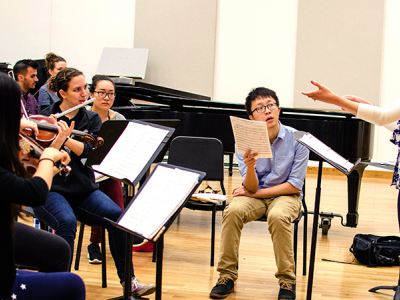
Music professors at colleges and conservatories work with advanced students to deepen instrumental skills, refine ensemble playing, and expand knowledge of theory, composition, reading, repertoire, improvisation, and more. Music professors at universities might also offer an appreciation course for non-majors.

At a Glance
There are three prerequisites to applying for a job as a college or conservatory professor: One must be a skilled artist, an experienced instructor, and a graduate of a master's or doctoral degree program. Many begin their higher-education teaching careers while still enrolled in graduate school, as teaching assistants. Successful college or conservatory professors can move up the ranks from untenured guest positions to tenured full faculty ones, and eventually become the head or chair of their departments.
There are numerous varieties and levels of teaching positions at conservatories, colleges, and universities, from guest lecturer to department chair. Positions are either tenured, which means permanent, or untenured, which means they may be renewed at the discretion of the institution and relevant deans.
General and/or deep knowledge of instruments; music theory; music history; reading and writing music; music composition; music improvisation; education; written and verbal communication; organization
University and conservatory professors must be accomplished artists, to be sure, but equally important are strong teaching, organization, and communication skills. Passion and experience are fantastic for professors, but only insofar as they're communicated in a way that's helpful to students.
Depending on their position within the faculty, a professor might teach only a handful of private lessons and a master class, leaving plenty of time for personal projects and other work, or may carry a full teaching schedule and attend evening concerts, performances, and recitals on top of that, leaving time for little else. Professors might live on campus or commute from elsewhere, with more significant travel a possibility.