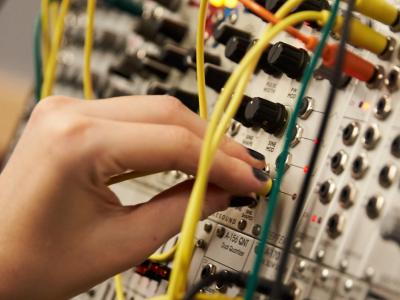
What does a Synth Programmer do?
Synth programming is an almost mythic career with a paradox at its core: despite most music industry professionals agreeing that it's impossible to make a living as a synth programmer, the skill continues to be in exceptionally high demand. The truth is that synth programming is not a career so much as a constellation of opportunities based around a particular skillset—and so-called synth programmers are multitalented musician-engineers who use their flexibility to find a wide variety of work. Synth programming as a skill can be complementary to almost any musical endeavor, which is perhaps why synth programmers perform so many different roles.
At a Glance
There's not much of an established career path for synth programmers. "Making it" as a synth programmer usually means finding consistent sources of work that enable the programmer to continue exploring new sonic territory and growing as an artist. The top synth programmers provide vital support to other successful creatives or become eminent.
An aspiring synth programmer should accumulate experience in related roles. Synth programmers can also take part in synthesizer programming contests hosted by major synthesizer companies, which can be great sources of exposure.
- Digital signal processing (DSP)
- Digital audio workstations (DAWs)
- MIDI
- Logic
- Ableton
- Cubase
- Pro Tools
- Sequencing software
- Analog synthesizers
- Audio engineering
- Audio production
- Sound design
Synth programmers are obsessed with the technical aspects of creating and shaping sound, and curious about new methods and technologies that assist in doing so. Innovators and experimentalists, they would rather go to the source and program their own sounds than use presets.
Finding a steady source of work is the real challenge for synth programmers, who are usually employed as freelancers and perform a number of distinct roles depending on the needs of the project. While most synth programmers have a home studio, the certainties end there; synth programmers lead eclectic work lives based on the types of gigs they're pursuing.